 For owners
What a Cup of Boba Really Costs to Make — and Why Most Owners Have No Idea
You had lines out the door all weekend. You're exhausted. And somewhere around closing, staring at the register, a quiet thought creeps in: where did all the money actually go?
If you've felt that, you're not bad at running a business. You're just flying blind on the one number that decides whether all those hours are worth it: what each drink actually costs you to make.
Most owners can tell you their best-seller and their busiest hour without thinking. Ask them what a large brown sugar milk tea costs to pour — tapioca, base, milk, the cup, the lid, the straw — and the room goes quiet. Not because they're careless. Because nobody ever handed them the breakdown. So let's do it.
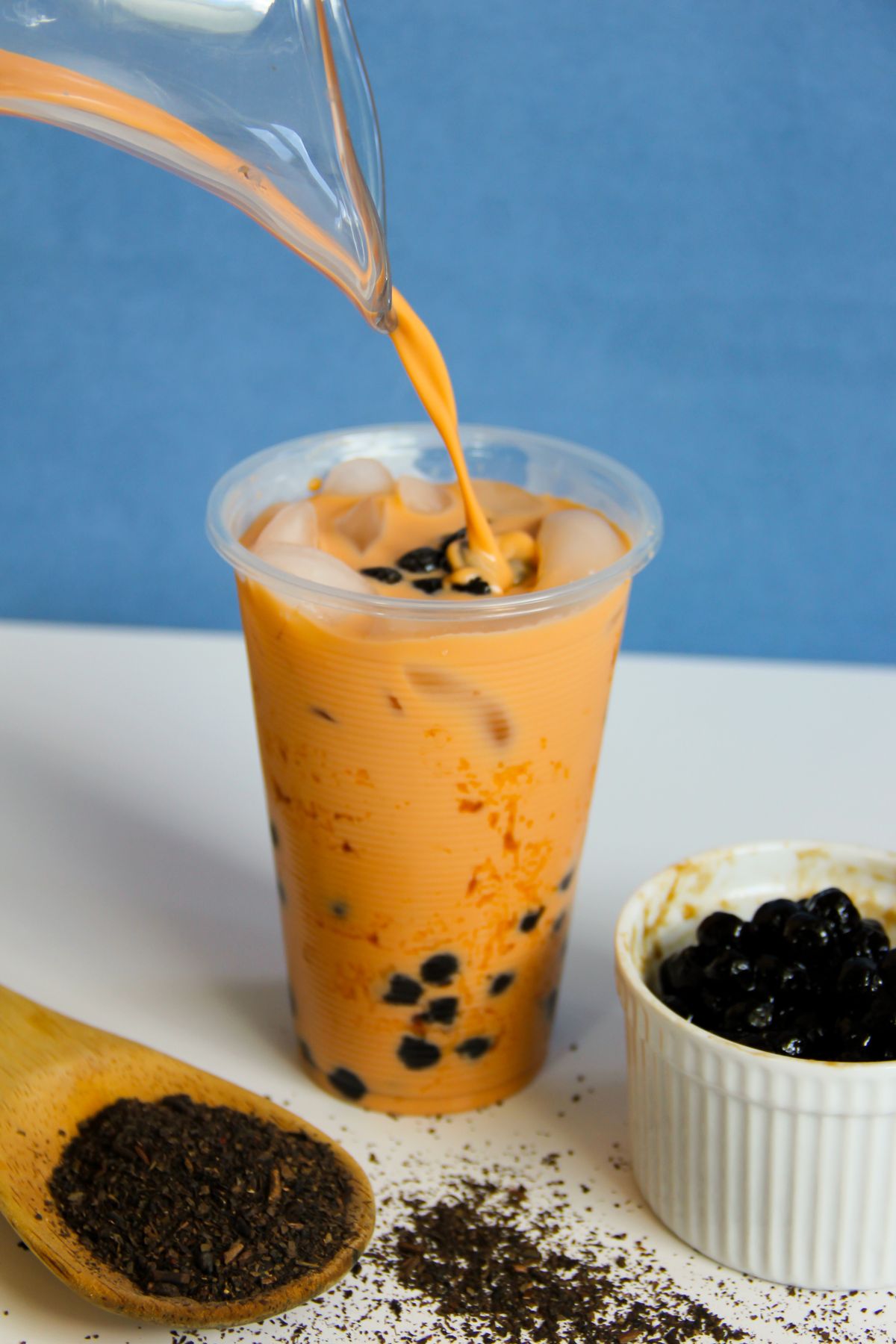
The honest line-by-line: one large brown sugar milk tea
Here's a realistic build using typical 2026 wholesale prices. Your numbers will differ — that's the whole point — but the shape is almost always the same:
| Ingredient | Amount | Cost |
|---|---|---|
| Tapioca pearls | 50 g | $0.14 |
| Brown sugar syrup | 40 ml | $0.16 |
| Milk | 180 ml | $0.22 |
| Brewed tea | 6 g leaf | $0.15 |
| 16oz cup + lid + straw | 1 set | $0.18 |
| Ingredients | $0.85 |
So far so good — sell it at $5.75 and that looks like an 85% margin. This is where most owners stop counting, smile, and assume they're swimming in it. They're not. Because that $0.85 is only the part you can see.
The costs nobody puts in the spreadsheet
The real cost of a cup isn't just what's in the cup. It's what it took to get that cup into a customer's hand:
- Waste & over-pouring. The pearls cooked at 2pm and tossed at 6. The heavy hand on the syrup. The remake because it wasn't sweet enough. Across a week this quietly adds 10–15% to your true ingredient cost.
- Labor per cup. Someone got paid to brew, cook, shake, seal, and ring it up. On a slow Tuesday, labor per drink can cost more than the ingredients.
- Card fees. ~3% off the top of nearly every sale. On $5.75, that's another ~$0.17 gone before you keep a cent.
- Comps and mistakes. The free drink for the unhappy regular, the wrong order. Small, constant, uncounted.
Why this is the most expensive thing you're not measuring
Here's the brutal math: a leak of just $0.30 per drink — a slightly heavy pour, a supplier who quietly raised prices, a little extra waste — feels like nothing. But at 300 drinks a day, that's $90 a day. ~$2,700 a month. Over $32,000 a year evaporating, and you'd never feel the individual drop.
You can't fix what you can't see. And the owners who do see their per-cup number tend to find the same three cheap wins:
1. Portion the expensive stuff
Tapioca, syrup, and powders are where the money hides. A cheap scoop and a pump bottle pay for themselves in a week — not because your staff is careless, but because "a little extra" times thousands of cups is real money.
2. Track what you throw away
For one week, jot down what gets tossed and why. Most shops are shocked. The fix is usually free — brew smaller batches more often, cover the pearls — and it goes straight to your bottom line.
3. Actually check your supplier prices
When did you last compare what you pay per kilo of tapioca to the shop down the street? Suppliers raise prices quietly. A 10% difference on your top five ingredients is often the gap between a tired year and a good one.

You shouldn't need a spreadsheet for this
None of this requires an accounting degree. It requires visibility — seeing the real cost and margin of each drink, automatically, from the prices you already pay. That's exactly the gap we kept hearing about from owners, so we built a free tool for it.
See your real margin in 60 seconds — free
Our free checker estimates the cost-to-make and profit on your menu using real wholesale prices — no signup, no spreadsheet. And inside BobaSync, your true per-cup cost updates automatically from what you actually pay your suppliers.
Try the free checker →Written by the team at BobaSync — the app boba shops use to order from every supplier in one place, track inventory, and finally see where each cup of profit goes.